Mid-Century Modern Interior Design Style
Mid-century modern is one of the most enduring design movements in history. Born in the post-war optimism of the 1950s and 60s, it combines organic shapes, bold colors, and a seamless relationship between indoor and outdoor spaces.
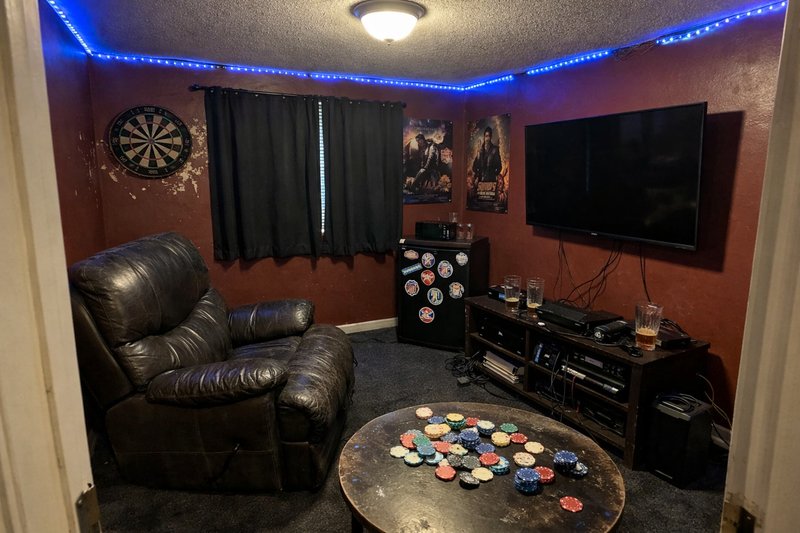 Before
 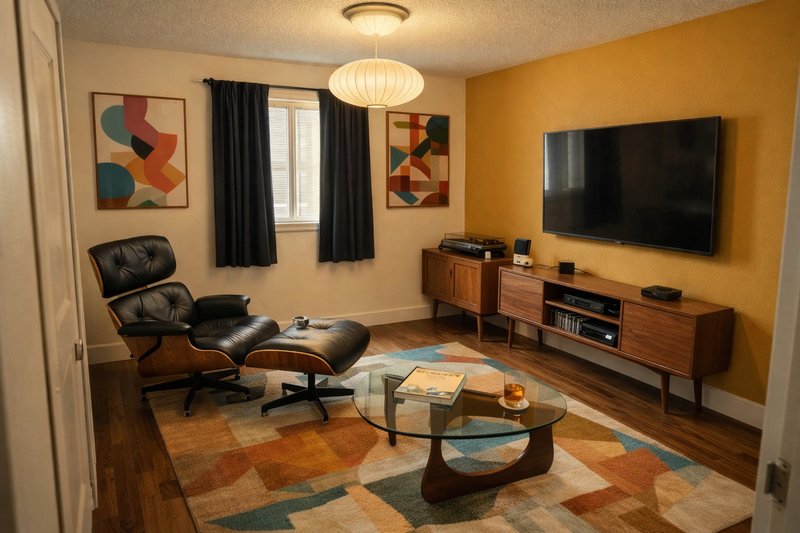 After
After Man Cave - Mid-Century Modern
Origins & Background
Mid-century modern design flourished from roughly 1945 to 1970, driven by designers like Charles and Ray Eames, Eero Saarinen, and Arne Jacobsen. The post-war era brought new materials like molded plywood and fiberglass, plus a fresh optimism that showed up in bright colors and playful forms. California became a hotbed for the movement, where architects like Richard Neutra and A. Quincy Jones designed homes that blurred the line between inside and outside.
Key Elements
- Iconic furniture silhouettes (Eames lounge, Saarinen tulip table)
- Tapered, splayed legs on furniture
- Floor-to-ceiling windows connecting inside and outside
- Bold accent colors against neutral backgrounds
- Starburst and atomic-era decorative motifs
- Built-in storage and room dividers
Color Palette
Materials
Designing with Mid-Century Modern
What makes mid-century modern remarkable is its staying power. Furniture designed 70 years ago still looks fresh in a modern home. The Eames lounge chair, the Noguchi coffee table, the Nelson bubble lamp: these pieces transcend trends because their proportions and craftsmanship are simply right.
The style works on the principle that form follows function, but adds the caveat that function should be beautiful. Chairs are designed to cradle the body. Shelving systems adapt to what you need to store. Room dividers create privacy without blocking light. Every design decision serves both purpose and aesthetics.
Color in mid-century modern spaces is confident. While the bones of the room often stay neutral, accent colors arrive in saturated punches: a teal sofa, mustard throw pillows, an orange pendant lamp. The key is using color boldly but selectively rather than everywhere at once.
One practical advantage of mid-century modern design is that it scales well. A full room with authentic vintage pieces makes a stunning statement, but even adding a single iconic chair or a starburst mirror to an otherwise neutral room brings that mid-century energy.
Best Rooms for Mid-Century Modern
Living Room
Statement furniture and bold art shine in the main gathering space
Dining Room
A tulip or pedestal table with molded chairs creates an iconic scene
Home Office
A walnut desk with a statement chair combines style and function
Man Cave
Retro bar carts, vinyl setups, and iconic seating create character
Related Styles
Scandinavian
Light, bright, and functional. White walls, blonde wood, cozy textiles, and thoughtful simplicity. Every piece earns its place in the room.
Contemporary
Current and evolving. Smooth surfaces, neutral palettes with strategic color pops, and a focus on open space and natural light. Design for how we live now.
Art Deco
Glamorous and geometric. Bold patterns, rich jewel tones, metallic accents, and luxurious materials bring 1920s sophistication into the modern home.
Organic Modern
Nature-inspired minimalism. Curved furniture, raw stone, live-edge wood, and earthy tones create warmth without clutter. The softened side of modern design.
Try Mid-Century Modern on Your Room
Download ReVision AI and see your space transformed into Mid-Century Modern style in seconds. 3 free transformations included.