Kitchen Redesign: Plan and Visualize Your Dream Kitchen Before the Work Begins
Key Takeaways
- Most kitchen redesign regrets come from making style decisions too late, when it’s already expensive to change course
- Locking in your design direction before demo day prevents costly change orders
- AI visualization lets you see your kitchen transformed before a single cabinet comes down
- The difference between a stressful renovation and a smooth one usually comes down to how much planning happened up front
Why Kitchen Redesigns Go Wrong Before They Start
I’ve been doing kitchen remodels in the Pacific Northwest for over two decades. Third-generation carpenter, and I still see the same pattern repeat itself on almost every job. The homeowner starts the project with a rough idea and makes the real design decisions under pressure, mid-project, when the walls are already open.
That’s the most expensive time to change your mind. Once the old cabinets are in a dumpster and your plumber has roughed in new lines, you’re locked in. Whatever seemed flexible at the planning stage suddenly feels permanent, because the cost of pivoting has tripled.
A kitchen redesign isn’t just a construction project. It’s a design project that happens to require construction. The design work should come first.
The Problem With “I’ll Know It When I See It”
Most homeowners walk into a kitchen redesign knowing what they don’t want. They hate the old tile. They’re done with the dark cabinets. The fluorescent light over the sink has to go. But translating “I don’t want this anymore” into a clear vision of what you actually do want is harder than it sounds.
That’s not a personal failure. Most people aren’t trained to think in three dimensions about space, color, and material combinations. Interior designers spend years developing that skill. Expecting to nail it from a Pinterest board and a few paint chips is a lot to ask.
The result is usually indecision, then rushed decisions, then regret. The homeowner commits to a cabinet color they thought they loved, it arrives on site, and in context with the flooring and countertops it doesn’t look anything like what they imagined.
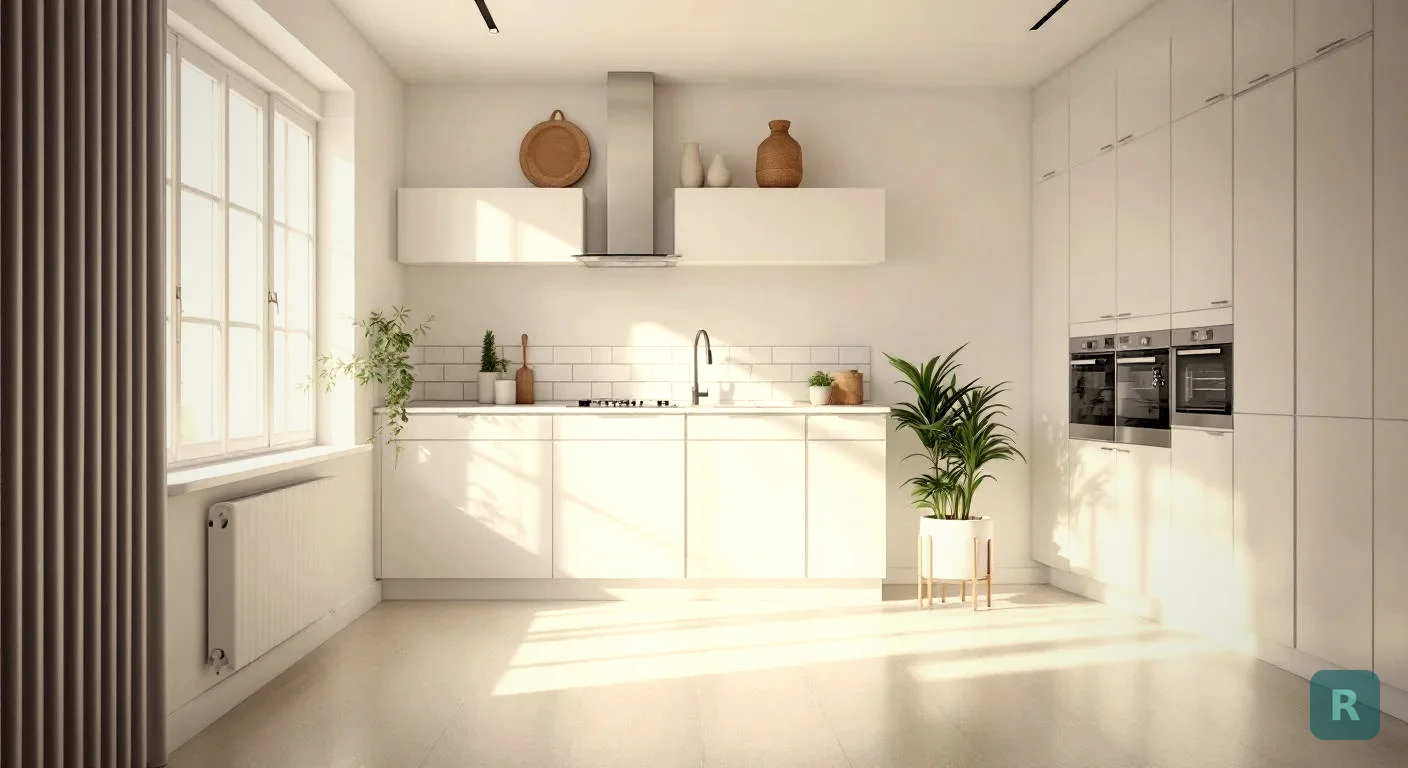
The transformation above is a standard mid-range kitchen redesign in this region. It’s a significant visual change, and most homeowners couldn’t accurately picture it before the work started. That gap between what you can imagine and what you’ll actually get is where most of the stress in a remodel lives.
What a Kitchen Redesign Actually Costs
Before you get too far into the design phase, a realistic budget conversation is necessary. There’s no point falling in love with custom inset cabinets if your budget is for semi-custom stock.
These ranges represent honest numbers, not marketing minimums. The lower end assumes stock cabinets, standard countertops, and mid-grade appliances with no structural changes. The upper end includes semi-custom cabinetry, quartz countertops, high-end appliances, and any plumbing or electrical work that comes up when the walls open.
Add 15-20% contingency to any kitchen budget. In Pacific Northwest homes especially, moisture damage behind sinks, outdated electrical panels, and plumbing that doesn't meet current code are common discoveries. You can't always see what's there until demo day.
Choosing Your Kitchen Style
The style decision shapes everything downstream. The cabinets, hardware, countertops, backsplash, fixtures, and lighting all need to work together. Changing your mind about style after orders are placed creates expensive delays and restocking fees.
The most popular kitchen styles right now each carry distinct material and color requirements:
- Shaker / Modern Farmhouse - White or painted cabinetry, quartz counters, apron sink, open shelving, black hardware
- Contemporary - Flat-front cabinets, waterfall island countertop, integrated appliances, minimal hardware
- Japandi - Natural wood tones, simple clean lines, matte finishes, warm neutrals
- Mid-Century Modern - Warm wood grain, simple hardware, bold accent colors, geometric tile
The Step Most Homeowners Skip
Before committing to any style, material, or layout, you should see what your actual kitchen would look like transformed. Not a kitchen that looks vaguely similar in a catalog photo. Your kitchen, your layout, with the redesign applied.
This is the step most homeowners skip because, until recently, it required hiring a designer or an architect with expensive rendering software. Now it doesn’t.
ReVision AI lets you snap a photo of your current kitchen and see it transformed into any design style in seconds. You’re not looking at a similar kitchen - you’re looking at your kitchen, your layout, your windows, with the redesign applied. That’s a completely different thing from a magazine photo.
The gap between a contractor’s verbal description and a homeowner’s mental picture is where most disagreements in the renovation process come from. Visualization closes that gap before the work starts.
How to Use Visualization in Your Planning Process
Stand in a corner or doorway to get the widest view. Natural light helps. You want to capture the full layout - cabinets, counters, appliances, and flooring in one shot.
Run your kitchen through 3-4 different styles. See Japandi next to Modern Farmhouse next to Contemporary. This narrows down what actually works for your space, not just what looks good in a magazine.
Bring the visualizations to your contractor meeting instead of Pinterest screenshots. Showing your contractor your actual kitchen in a target style makes the material and scope conversations far more productive.
Once you have a clear visual direction, filter all your material selections through it. Cabinet samples, countertop edges, tile options, and hardware all get evaluated against the target look you've already committed to.
Check out the before/after gallery to see real room transformations across different styles. It’s a useful reference for understanding what’s possible before you start making calls.
Your Kitchen Redesign Action Plan
A smooth kitchen redesign comes down to doing the right things in the right order. Here’s the sequence that avoids the most common and costly mistakes:
- Set your real budget - not the aspirational number. What can you actually spend, including 15-20% for surprises?
- Visualize first - try ReVision AI free and run 3 transformations of your actual kitchen before you meet with anyone
- Pick a direction and stick to it - indecision mid-project costs real money in change orders
- Get at least 3 bids on the same defined scope - not vague ballpark figures
- Lock in material selections early - custom cabinets and specialty tile have 4-8 week lead times; late orders stall jobs
- Plan for the disruption - expect 4-8 weeks without a functional kitchen on a full redesign
- Do it once and do it right - a well-executed kitchen redesign adds real value to your home and is something you’ll live with for 15-20 years
The homeowners who end up happiest with their kitchen redesign aren’t necessarily the ones with the biggest budgets. They’re the ones who got clear on what they wanted before the work started. Visualization is the fastest way to get there.
See what your kitchen could look like in a completely different style - download ReVision AI and try 3 free transformations before your first contractor call.
Get Design Inspiration Weekly
Fresh room makeover ideas, renovation tips, and style guides delivered to your inbox.
Design tips and inspiration only. Unsubscribe anytime.
Related Articles
AI Interior Decorator: How It Works and What It Can Actually Do
An AI interior decorator turns a photo of your room into styled design options in seconds. Here's how it works, what it nails, and where it falls short.
8 min readPaint AI Color Visualizer App: See the Color on Your Walls Before You Buy a Gallon
A paint AI color visualizer app shows real wall colors in your own room before you buy a single gallon. Here's how I use one on real jobs as a contractor.
6 min readDecorate With AI: How to See Your Room Restyled Before You Spend a Dime
Want to decorate with AI but not sure where to start? Here's how a third-generation carpenter uses it to test styles, layouts, and colors before buying.
8 min read