Backyard Renovations: 7 Projects That Actually Pay Off (And What They Cost)
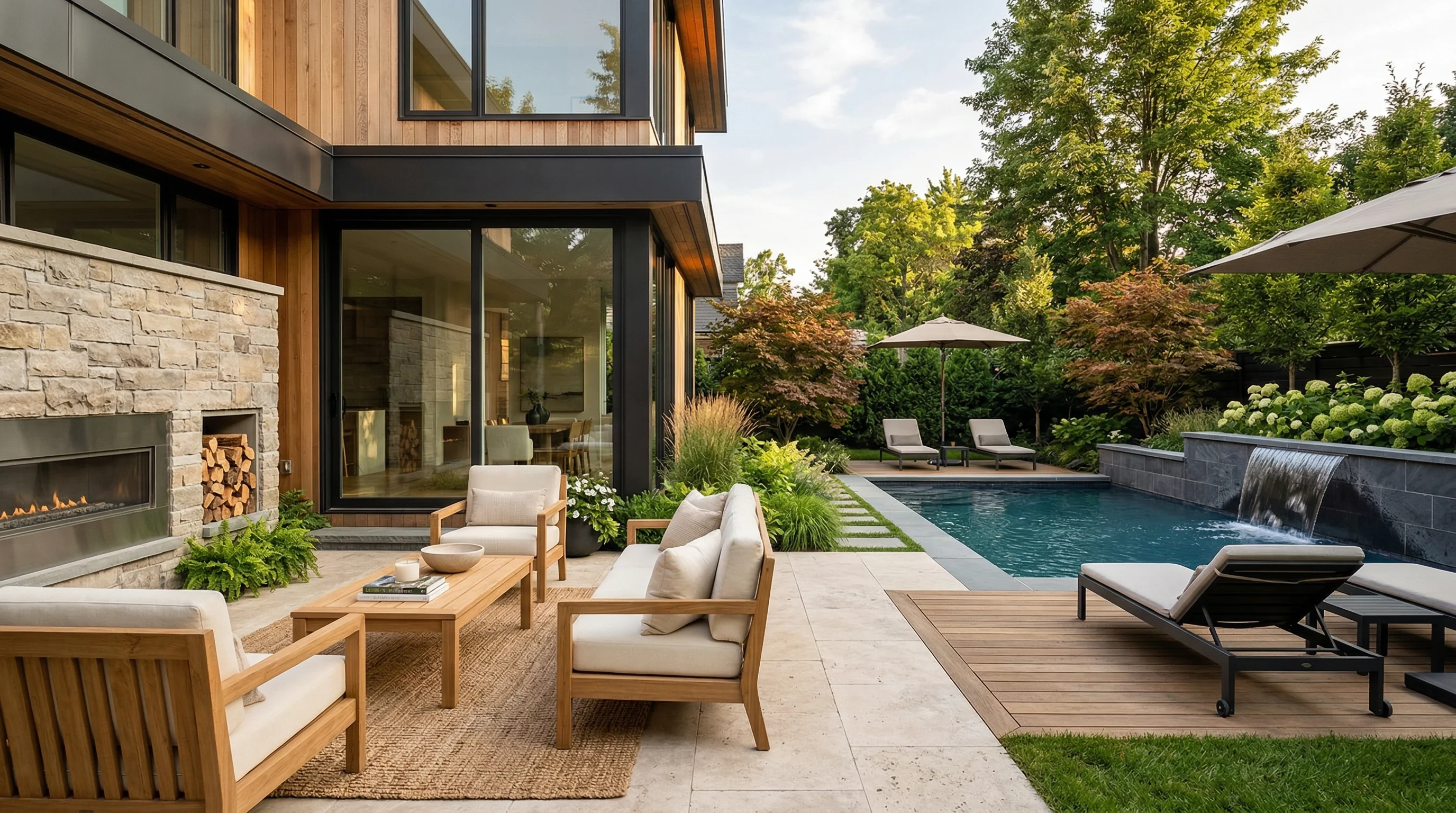
Key Takeaways
- A well-planned backyard renovation returns 50-80% of your investment at resale, with decks and patios leading the pack
- Budget $5,000-$15,000 for a mid-range patio or deck, $10,000-$30,000 for an outdoor kitchen
- Start with a clear layout plan before buying a single bag of concrete - most backyard budget blowouts start with no plan
- Drainage is the #1 thing homeowners overlook and the #1 thing that causes problems two years later
- Visualize your backyard transformation before committing to materials with ReVision AI
I’ve watched more homeowners waste money in their backyard than anywhere else in the house. Not because the projects are bad ideas. Because they start without a plan, pick materials they saw on Instagram, and skip the boring stuff that actually matters - like grading and drainage.
Your backyard is the one part of your home where a $10,000 investment can completely change how you live. But it’s also the easiest place to spend $10,000 and end up with a sinking paver patio and a fire pit you used twice.
Here’s what I’ve learned from 20 years of building things outside.
The 7 Backyard Renovations Worth Doing
Not all backyard projects deliver equal value. Some make your outdoor space genuinely useful. Others look great on Pinterest and fall apart after two Pacific Northwest winters.
These are the ones I recommend, ranked by bang for your buck.
1. Paver or Concrete Patio
This is where most backyard renovations should start. A solid patio gives you a usable surface for everything else - dining, grilling, lounging, entertaining. Without it, you’re putting furniture on grass and wondering why everything sinks.
Pavers run $12-$25 per square foot installed. Stamped concrete is slightly less. Plain poured concrete is the cheapest option but also the most likely to crack over time, especially in climates with freeze-thaw cycles.
The hidden cost? Base preparation. A proper compacted gravel base is the difference between a patio that lasts 20 years and one that heaves after two winters.
2. Deck Addition
Decks are the classic backyard upgrade for a reason. They work with slopes, they create a defined outdoor room, and they connect the house to the yard in a way that flat ground doesn’t.
Composite decking (Trex, TimberTech) runs $25-$45 per square foot installed. Pressure-treated wood is $15-$25. Composite costs more upfront but you’ll never stain it, sand it, or replace rotted boards. I’ve torn out enough rotted cedar decks to know the maintenance math eventually catches up.
3. Outdoor Kitchen
This is the project that gets homeowners the most excited. It’s also the one where budgets go sideways fastest. A basic built-in grill station with countertops runs $10,000-$15,000. Add a sink, fridge, and pizza oven and you’re looking at $25,000+.
My honest advice: start small. A quality built-in grill with a concrete countertop and some storage is all most families actually use. You can always add later.
Run a gas line and electrical before any countertops go in. Retrofitting utilities under finished hardscape costs 3-4x what it would have cost to do it first. I've seen homeowners tear up brand-new patios to run a gas line they forgot about.
4. Pergola or Covered Patio
Shade changes everything. A pergola turns a hot, unusable slab into a space people actually want to sit in during summer. A full roof cover extends your outdoor season by months.
Freestanding pergolas start around $4,000 for a basic wood structure. Attached aluminum or vinyl covers with integrated gutters run $6,000-$12,000. The permitting requirements vary by city, so check before you order materials.
5. Fire Pit Area
This is the highest-satisfaction, lowest-cost backyard project I’ve seen. A proper fire pit with a gravel surround and some seating runs $1,500-$3,000. Go with a gas fire pit built into a stone surround and you’re at $4,000-$6,000.
People use these more than they expect. Something about fire just draws everyone outside.
6. Retaining Walls
Not glamorous. Absolutely necessary if your yard has any slope. A retaining wall isn’t decoration - it’s infrastructure. It holds soil, manages water flow, and creates usable flat areas where you’d otherwise have an unusable hillside.
Segmental block walls run $20-$35 per square face foot installed. Natural stone is $30-$50+. Anything over 4 feet tall needs engineering and permits in most jurisdictions.
7. Landscape and Hardscape Refresh
Sometimes you don’t need a major build. New plantings, fresh bark or gravel, a defined pathway, and some outdoor lighting can make a tired backyard feel completely different for $3,000-$8,000.
This is the renovation I’d recommend for anyone selling in the next 1-2 years. It’s the best return for the lowest investment.
The 3 Mistakes That Kill Backyard Budgets
I’ve seen the same three problems wreck backyard projects over and over.
Water flows downhill. If your new patio, deck, or outdoor kitchen changes the grade of your yard without accounting for where water goes, you'll end up with pooling, erosion, or water pushing toward your foundation. Fixing drainage after the fact costs thousands. Planning for it upfront costs almost nothing.
Mistake #2: Choosing materials based on looks alone. That gorgeous natural stone patio you saw online? It might not handle your climate. Some stones spall in freeze-thaw. Some pavers stain permanently from tree sap. Ask your contractor or supplier what performs well in your specific region before you fall in love with something on a screen.
Mistake #3: Building everything at once. The best backyards I’ve built were done in phases. Patio first. Pergola next year. Outdoor kitchen the year after. This lets you actually use each addition, figure out what you want next, and spread the cost. Trying to do a $40,000 backyard transformation in one shot usually means cutting corners somewhere.
How to Plan a Backyard Renovation That Actually Works
Before you call a contractor or start shopping for pavers, do this:
Measure the space. Note the slope, sun exposure through the day, existing trees, utility lines, and property setbacks. Most cities require structures to be 5-10 feet from the property line.
Dinner parties for 8? Kids' play area? Quiet morning coffee spot? The use case drives the layout. Don't design for a lifestyle you don't live.
Whatever you think it will cost, add 15-20%. Outdoor projects hit surprises just like indoor ones - rocky soil, root systems, old irrigation lines, grading issues.
Snap a photo of your backyard and see what different design styles would look like in your actual space. ReVision AI shows you the transformation before you spend a dollar on materials.
Seeing the Finished Backyard Before You Start
Here’s the thing most people get wrong about backyard renovations. They pick materials and styles from photos of someone else’s yard. Different dimensions. Different lighting. Different climate. Then they’re surprised when it doesn’t look the same in their space.
I used to tell clients to collect Pinterest boards and magazine photos to show me what they wanted. It worked, sort of. But there was always a gap between the inspiration photo and their actual yard. The proportions were different. The style that looked great in a magazine didn’t quite fit the space.
That’s exactly why I helped build ReVision AI. Take a photo of your backyard as it is right now, pick a style, and see what the renovation could look like in your actual space. No guessing. No expensive designer. Just a clear picture of what’s possible before you commit to a plan.
Curious how your backyard could look? Try it free with ReVision AI - you get 3 free transformations.
Your Backyard Renovation Checklist
- Measure your yard and note slopes, sun patterns, and utility locations
- Define your primary use case (entertaining, relaxing, kids, all of the above)
- Set a budget with 15-20% contingency built in
- Check local permit requirements for structures, walls, and electrical
- Plan drainage before any hardscape work begins
- Visualize your design in your actual space with ReVision AI
- Get 3 contractor bids and compare scope, not just price
- Phase the project if your budget is tight - patio first, extras later
- Run utilities (gas, electric, water) before hardscape goes down
Get Design Inspiration Weekly
Fresh room makeover ideas, renovation tips, and style guides delivered to your inbox.
Design tips and inspiration only. Unsubscribe anytime.
Related Articles
The Best Free Home Remodel App (From a Contractor Who Uses One)
A free home remodel app can show you the finished room before demo day. Here's what to look for, what free really means, and how to test one right.
8 min readAI Remodel Kitchen: How I'd Preview a Kitchen Before Spending a Dollar
An AI remodel kitchen tool lets you see new cabinets, counters, and layouts before demo day. Here's how I'd use it as a contractor to plan a kitchen right.
8 min readRenovate With AI: How to Remodel Your Home Before You Spend a Dime
Use a renovate AI home remodel app to preview any room in seconds. See how to picture your space transformed before you ever swing a hammer or sign a bid.
8 min read