Coastal Bedroom Design Inspiration: How to Get It Right Without the Kitsch
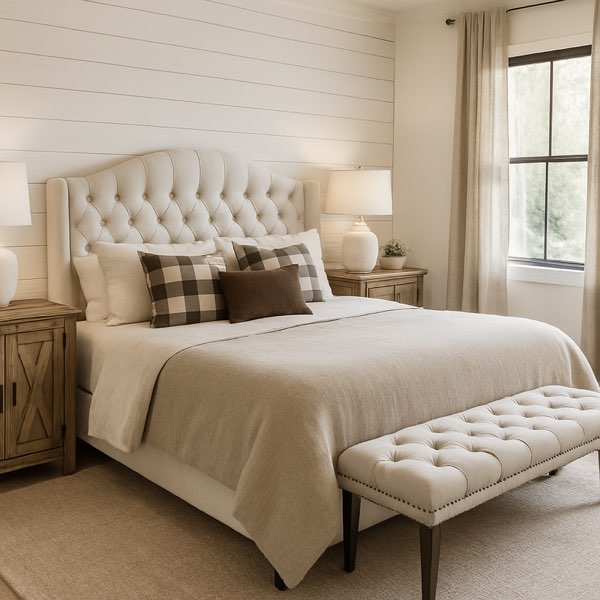
There’s a version of coastal bedroom design that looks like a gift shop at a beach boardwalk: ropes, anchors, “Life is Better at the Beach” signs, shells glued to picture frames, and a color scheme that hits you like a bucket of ocean water. That’s not what we’re talking about here.
There’s also a version that’s genuinely beautiful. Calm, layered, light-filled, and connected to the feeling of being near water without beating you over the head with nautical clichés. The difference between those two outcomes comes down to restraint, material quality, and understanding what actually makes coastal design work.
Beach Theme vs. Genuine Coastal Design
This is the most important distinction you can make before starting any coastal-inspired room. They look different, cost different, and feel different to live in.
Beach theme is decorative and literal. Driftwood signs. Fish nets. Shells as the primary motif. Stripes on everything. Bright blue and white contrast that reads as patriotic as much as coastal. It can be fun for a vacation rental or a kids’ room, but it ages fast and looks like you tried too hard.
Genuine coastal design is atmospheric and material-based. It captures how a coastal space feels: light filtering through linen curtains, the texture of natural fiber rugs underfoot, wood that’s been worn smooth by time and weather, the soft blue-grey of morning fog over water, the warmth of sand before the sun gets too high. Nothing has a fish on it. Nothing announces itself as coastal. It just feels like the coast.
The shift is from literal to evocative. You’re not hanging anchors on the wall to remind people of the sea. You’re choosing materials and tones that carry the feeling without the props.
The Coastal Bedroom Color Palette
Get this right and everything else becomes easier.
Soft blues. Not Navy. Not bright turquoise. The blues that work in a coastal bedroom are muted, slightly grayed, and quiet. Powder blue, dusty sky blue, a blue that reads almost like a neutral in certain light. Think of the color of a calm bay on an overcast morning. These blues work on walls, bedding, and occasional furniture.
Sandy neutrals. The warm, dry, slightly golden tones of beach sand. This is your main neutral in a coastal bedroom. Sandy linen, warm greige walls, natural jute or sisal underfoot. This palette grounds the room and keeps the blues from feeling cold.
Warm whites. Not bright white. Warm white, with yellow undertone rather than blue. Warm white woodwork, warm white walls in some interpretations, warm white bedding as the base layer. This keeps the room from feeling like a hospital even when the other tones are light.
Driftwood tones. Weathered grey-brown wood, bleached natural wood, light oak with visible grain. These colors sit at the junction of grey and warm and work as a bridge between the blues and the sandy neutrals.
Muted coral and blush as accents. Used sparingly, a muted coral or warm blush adds warmth and prevents the palette from going cold or generic. A single coral pillow, a blush-toned ceramic lamp base, a faded terracotta throw. These accents are optional but they add life when the main palette is playing it quiet.
What to avoid in the color palette: anything high-contrast, anything neon, and anything that reads as a flag rather than a mood. Bright red and white, bright blue and white, primary-color stripes: these are beach-theme colors, not coastal design colors.
Materials That Make Coastal Design Work
The materials are where genuine coastal design lives. Get these right and the room carries the feeling without any props.
Linen. The quintessential coastal fabric. Linen bedding, linen curtains, linen throw pillows. Linen has a texture that reads as relaxed without being sloppy. It wrinkles slightly and looks better for it. It breathes well, which matters in a bedroom. It comes in exactly the warm whites, sandy neutrals, and muted blues that the palette calls for.
Rattan and wicker. A rattan headboard, a wicker side table, a woven pendant light shade. These materials are visually light, they carry genuine coastal connection without screaming “beach house,” and they add texture that prevents the room from feeling flat. Use them as accents rather than filling the room with them.
Light, natural wood. Whitewashed oak, light ash, bleached pine. The grain should be visible and the finish should be minimal. Dark stained woods feel too formal for this palette. Painted woods feel too finished. The coastal bedroom wants wood that looks like it came from somewhere honest.
Natural fiber rugs. Jute, sisal, seagrass. These provide texture underfoot that connects to the material story of the room. They’re also practical in a bedroom: durable, easy to clean, and they don’t show wear the way a plush carpet does. Layer a softer rug over the natural fiber if you want more underfoot softness.
Ceramic and pottery. Matte ceramic lamp bases, hand-thrown pottery vessels, unglazed clay pieces. These add weight and warmth without competing with the color palette. Choose pieces with visible texture: the kind that looks handmade rather than factory-perfect.
The Key Pieces in a Coastal Bedroom
You don’t need to furnish the whole room to land the look. A few high-impact pieces establish the direction.
The headboard. A rattan headboard, a linen-upholstered headboard in a neutral tone, or a simple slatted wood headboard. The headboard is the first thing you see when you walk in. Get this right and it sets the tone for everything else in the room.
The bedding. Linen duvet in warm white or soft sand, layered with a textured knit throw and two or three pillows in coordinating colors. Keep the pillow count honest. The coastal bedroom isn’t a stack of eighteen throw pillows. It’s three or four that look like someone actually uses the bed.
The nightstands. A light wood nightstand, a rattan accent table, or a simple cane-front cabinet. The nightstand doesn’t need to match exactly. In fact, a slight mismatch in style but coordination in tone feels more relaxed and authentic to the coastal spirit.
The lighting. A woven pendant over each nightstand, or a simple linen-shaded table lamp. Warm bulbs only. A cool-toned or bright white light source kills the coastal atmosphere. The light in a coastal bedroom should feel like afternoon sun through a sheer curtain, not a photography studio.
Window treatments. Sheer white or natural linen panels that filter light rather than block it. The coastal bedroom lives on natural light. Heavy drapes in dark colors shut out the thing that makes the palette work. If blackout capability is needed for sleep, layer a simple roller shade behind sheer panels.
How to Layer Texture
This is the skill that separates a coastal bedroom that looks designed from one that just looks beachy and flat.
Texture is how you create visual interest when your color palette is quiet. In a coastal bedroom, the palette is intentionally restrained, which means texture carries the weight.
Start from the floor and build up:
Floor: natural fiber rug with visible weave. Rough, honest texture. The base layer.
Bed: linen duvet with a slight rumple. Textured cotton blanket or waffle-weave coverlet as a mid-layer. A loosely knit throw folded at the foot. Three distinct textures, all in coordinating tones.
Walls and case goods: light wood with visible grain on the headboard or dresser. The grain is a texture you read at a distance.
Soft goods: a couple of pillows in a subtle woven fabric. Not printed, not patterned. Textured weave that catches light differently depending on the angle.
Accents: a ceramic lamp base, a woven pendant, a small piece of driftwood or a smooth stone on the nightstand. These are small textural notes, not the focus.
The result is a room where your eye moves around and finds something interesting at every stop, even though the color palette is nearly monochromatic. That’s what makes the room feel rich without feeling busy.
What to Avoid
The tourist-shop pitfalls are avoidable with a few clear rules.
No literal nautical motifs. No anchors, no wheels, no fish. The material palette does the coastal work without props.
No words on walls. “Life is Better at the Beach” and its relatives have no place in a designed coastal bedroom. If you want art, choose abstract pieces in the palette’s tones, a simple landscape photograph, or a piece of textile art.
No bright blue and white contrast. This reads as nautical costume, not coastal design. Keep the blues soft and muted, the whites warm rather than stark.
Don’t overdo the seashells. One beautiful shell or a small collection displayed simply is fine. A shelf covered in shells from a bag bought at a tourist shop is the thing you’re trying to avoid.
Don’t fight the light. Heavy curtains, blackout panels in dark colors, artificial lighting as the primary source: these all work against the coastal feeling. The whole palette is built around how natural light behaves in a space near water.
See It in Your Bedroom First
The coastal bedroom palette is soft enough that it can go wrong in a specific space if the existing architecture, light, or layout doesn’t support it. The difference between a bedroom that feels like a calm retreat and one that feels like a motel is often subtle.
Before you buy anything, see the transformation in your actual room. ReVision AI lets you snap a photo of your bedroom and see what it looks like in a coastal style transformation. You can see whether the room’s bones support the direction, whether the scale of the furniture works with your space, and whether the palette lands the way you imagined. That kind of preview is worth more than any mood board.
Browse all our design styles at ReVision AI to compare coastal against options like Scandinavian, Japandi, or contemporary, and see what fits your space and personality best.
The Bottom Line
Coastal bedroom design is one of the more achievable styles for most homeowners because the palette is forgiving and the materials are widely available. But the line between beautiful and kitsch is real, and crossing it is easy if you’re not intentional.
The rule of thumb: evoke the feeling, don’t announce the theme. Choose materials with integrity. Let natural light do the heavy lifting. Edit ruthlessly, because a coastal bedroom done right is a study in restraint.
Get those principles right and you’ll have a room that feels like the best version of waking up near water, without a single anchor in sight.
Get Design Inspiration Weekly
Fresh room makeover ideas, renovation tips, and style guides delivered to your inbox.
Design tips and inspiration only. Unsubscribe anytime.
Related Articles
AI Interior Decorator: How It Works and What It Can Actually Do
An AI interior decorator turns a photo of your room into styled design options in seconds. Here's how it works, what it nails, and where it falls short.
8 min readPaint AI Color Visualizer App: See the Color on Your Walls Before You Buy a Gallon
A paint AI color visualizer app shows real wall colors in your own room before you buy a single gallon. Here's how I use one on real jobs as a contractor.
6 min readDecorate With AI: How to See Your Room Restyled Before You Spend a Dime
Want to decorate with AI but not sure where to start? Here's how a third-generation carpenter uses it to test styles, layouts, and colors before buying.
8 min read