Before and After Room Makeover Ideas That Actually Work
There’s a specific moment that happens after a good room transformation. The homeowner walks in for the first time after the work is done, stops, and gets quiet. Not disappointed quiet. The other kind. The “I didn’t know it could look like this” kind.
I’ve been in that moment hundreds of times over 20-plus years of remodeling. It’s the best part of this work. And the rooms where it happens most often share something in common: a clear, dramatic shift between the before and the after.
Not every renovation delivers that moment. Some projects fix real problems without producing a visual wow. But if you’re doing a cosmetic or design-forward renovation and you want that transformative feeling, there are principles worth understanding.
What Makes a Before-and-After Compelling
The most powerful transformations share a few characteristics.
Contrast is king. A room that went from dated to current, from dark to light, from cramped to open - these show the gap clearly. Incremental upgrades rarely produce the wow. You need enough distance between before and after to feel the shift.
The bones stayed, the character changed. The best makeovers don’t just slap new paint on an old problem. They work with the structure of the space and transform what it feels like to be in it. Lighting, materials, color, and proportion all matter. Changing one thing rarely does the job.
The transformation fits the space. A before-and-after that tries too hard for the space it’s in reads as forced. A tiny bathroom that gets treated like a luxury spa can look beautiful in photos but awkward in person. The best transformations feel inevitable, like the room always wanted to be this.
Lighting is the invisible upgrade. The most underrated element in any room transformation. Old recessed can lights with yellow bulbs versus a thoughtful mix of ambient, task, and accent lighting tells two completely different stories about the same space. This is the lever most homeowners don’t know to pull.
Room-by-Room Transformation Ideas
Different rooms have different transformation potential. Here’s where you get the most dramatic before-and-after for the investment.
Master Bedroom
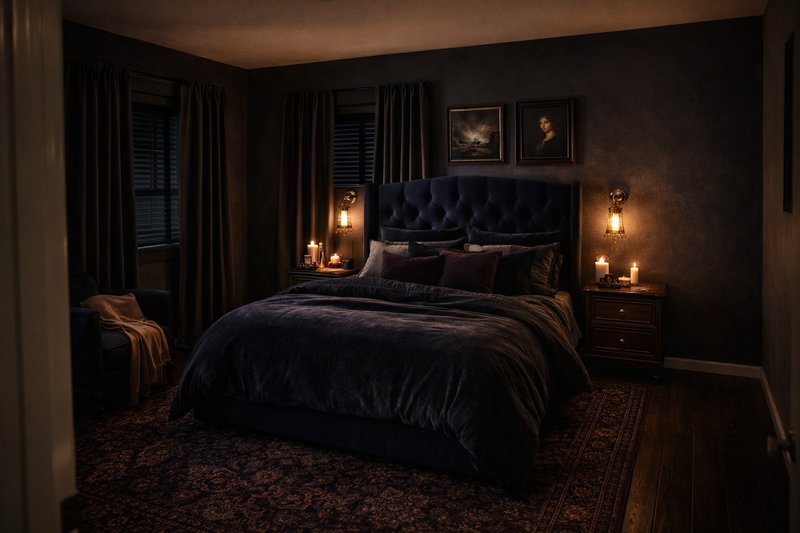
The master bedroom has some of the highest before-and-after impact because homeowners spend a lot of time there and often neglect it compared to the rooms guests see. A dated master with a ceiling fan, beige walls, and builder-grade trim becomes an entirely different experience with a thoughtful refresh.
What moves the needle in a master bedroom: a cohesive color story from walls to bedding, upgraded lighting (ditch the ceiling fan if it’s serving zero design purpose), and a focal point wall. Could be a wallpapered accent wall, a simple board and batten treatment, or a furniture arrangement that makes the bed the clear anchor.
The bedroom after image shows how dramatically a room can shift with the right approach.
Living Room
The room with the most variables and therefore the most transformation potential. Flooring, paint color, lighting, built-ins, fireplace surround, furniture arrangement - the living room has more levers than any other space.
The highest-impact changes: flooring replacement (nothing ages a living room faster than worn carpet), painting the ceiling a different color than the walls (this one surprises people but adds immediate depth), and adding architectural interest where there wasn’t any before.
Built-in shelving and cabinetry flanking a fireplace or TV is one of the most popular transformations I see requested. The before is a flat wall with a floating TV. The after is a room with character and purpose.
Kitchen
Most dramatic return per dollar, both visually and in actual resale value. A kitchen before-and-after is powerful because kitchens are so central to how a home feels and functions. But they’re also the most expensive room to do right.
The most accessible high-impact kitchen changes: cabinet painting or refacing (if the boxes are structurally sound), new hardware, new countertops, and updated lighting. You don’t always need a full gut renovation to produce a strong before-and-after.
Full gut renovations produce the most dramatic results but require planning. See the kitchen gallery to understand the range of what’s possible.
Bathroom
Small room, big visual impact when done well. Bathrooms punch above their weight in before-and-after transformations because the changes feel so complete. New tile, new vanity, new fixtures, new lighting - and you’ve essentially remade the room.
The tile is the biggest visual element. Don’t underestimate how much the tile choice defines the entire space. A subway tile bathroom and a large-format stone tile bathroom with the same footprint feel like different price points and different aesthetics entirely.
Primary bathrooms especially have strong before-and-after potential. Homeowners routinely underinvest in their primary bath and then wonder why the space never feels like what they see in photos.
Home Office
Accelerated by remote work, the home office transformation has become one of the most common projects I hear about. The before is usually a spare bedroom with a desk shoved in the corner and mismatched furniture. The after is a dedicated workspace that actually supports focus and professionalism.
Built-in shelving and desk units transform these rooms completely. Add good lighting - seriously, most home offices have terrible lighting - and a thoughtful color palette, and you have a room people actually want to work in.
Basement
Highest drama potential of any room in the house, purely because the starting point is often so raw. An unfinished or barely finished basement becomes a functional livable space. The contrast is inherently large.
The most successful basement transformations define a clear purpose for the space: a recreation room, a home theater, a guest suite with egress window, a kids’ playroom, or a combination. Basements that try to be everything end up being nothing. A clear purpose produces a clear design.
The Psychology of Seeing Change
There’s something real that happens in the brain when you see a before-and-after side by side. The gap between the two images tells a story about possibility. Your brain interprets the transformation not just as “this room looks better” but as “this is what’s possible.”
That’s why before-and-after content is so powerful. It’s not just aspirational. It’s evidence.
The challenge is that it’s hard to get that same psychological experience when you’re standing in your own room, trying to imagine what it could look like. The “before” is too familiar. Your brain fills in what’s already there instead of the hypothetical transformation.
This is the core problem that ReVision AI solves. Instead of imagining the transformation, you see it. Take a photo of your room right now, choose a style direction, and get a photorealistic result showing your actual space reimagined. The before-and-after experience happens before any money is spent or any wall comes down.
Browse the gallery to see what real transformations look like across different room types and styles. Use those as inspiration, then bring the experimentation into your own space with the app.
Using Visualization Before You Renovate
The smartest thing you can do before starting any room transformation is see it first. This seems obvious, but most homeowners skip this step and pay for it later in the form of mid-project changes, second-guessing, and results that are “fine” but not quite what they had in mind.
The style quiz is a good starting point if you’re not sure which design direction suits you. Once you have a sense of your style, take it into your actual space and see it applied.
The renovation budget tool helps you build a realistic financial picture before you commit to a direction. Knowing what a transformation will cost changes how you prioritize.
What a Good Before-and-After Requires
This is the contractor’s honest answer: it requires clarity before you start. The transformations that go smoothly and produce the wow moment at the end are almost always the ones where the homeowner knew exactly what they wanted before the first tool was picked up.
Indecision during a project costs money. Every “can we change that?” adds time and scope. The homeowners who walk in on day one with a clear vision, who’ve already processed the before-and-after in their heads, who know what the finished room looks like - those projects run better, cost less in surprises, and end with that quiet moment of “I didn’t know it could look like this.”
That’s what you’re shooting for. Clear the vision before the work starts.
Download ReVision AI and see your before-and-after before anyone picks up a tool.
Get Design Inspiration Weekly
Fresh room makeover ideas, renovation tips, and style guides delivered to your inbox.
Design tips and inspiration only. Unsubscribe anytime.
Related Articles
The Best Free Home Remodel App (From a Contractor Who Uses One)
A free home remodel app can show you the finished room before demo day. Here's what to look for, what free really means, and how to test one right.
8 min readAI Remodel Kitchen: How I'd Preview a Kitchen Before Spending a Dollar
An AI remodel kitchen tool lets you see new cabinets, counters, and layouts before demo day. Here's how I'd use it as a contractor to plan a kitchen right.
8 min readRenovate With AI: How to Remodel Your Home Before You Spend a Dime
Use a renovate AI home remodel app to preview any room in seconds. See how to picture your space transformed before you ever swing a hammer or sign a bid.
8 min read