Garage Remodel: What It Really Costs and Where to Start
Key Takeaways
- Garage remodels range from a few hundred dollars (basic organization) to $60,000+ for a full living space conversion
- Permits are required for converting a garage to habitable space in most jurisdictions - don't skip this step
- Moisture control is the first problem to solve before framing a single wall
- Insulation, electrical, and HVAC are the budget items most homeowners don't plan for
- Seeing the finished space before you commit makes the whole decision easier
A garage remodel is one of the most versatile home improvement projects you can take on. I’ve worked on dozens of them. The range of what people want from their garage is huge: some just want a cleaner, more organized storage space. Others want a workshop. And a growing number want to convert the whole thing into living space.
Each one of those is a different project with a different budget and a completely different set of challenges. Here’s the realistic picture.
How Much Does a Garage Remodel Actually Cost?
The honest answer is that it depends on what you’re turning the space into. A basic garage refresh with epoxy floors, some lighting, and wall storage will run $2,000-$8,000 if you’re doing it right. A full conversion to a bedroom, office, or ADU is a different animal entirely.
What drives the cost up fast:
- Insulation - most garages have none, or badly installed fiberglass batts that’ve been there for decades
- HVAC - heating and cooling a space with no existing ductwork is expensive
- Electrical panel upgrades - older homes often don’t have the capacity to spare
- Permits and inspections - required for any habitability work, and they add time
- Ceiling height - conversions need at least 7’6” of clear ceiling in most building codes
The homeowners I’ve worked with are regularly surprised by the HVAC piece. They budget for flooring and drywall and forget they’re essentially adding a new conditioned room to the house with no existing ductwork. That oversight can double the project cost.
Moisture: Solve It Before You Frame Anything
This is the step I see skipped more than anything else. PNW homes especially. A concrete slab wicks moisture from the ground. If you don’t address that before you frame walls and install insulation, you’ll have mold in the wall cavity within a couple of years.
Before you put down a single board or lay flooring, test the slab for moisture. Tape a sheet of plastic to the floor and leave it for 24 hours. If condensation forms underneath, you have a problem to solve first. Options range from concrete sealers and vapor barriers to more involved drainage work.
I’ve opened up garage remodel work done by other contractors and found insulation molded completely through because nobody dealt with the slab moisture. That’s a gut-and-redo situation. Do it right the first time.
The Permit Question (Read This Before You Start)
Converting a garage to living space without permits can make the space unlawful, void your homeowner's insurance, and create serious problems at the time of sale. The permit process exists to protect you.
I’ve watched homeowners try to skip permits on garage conversions. It causes problems eventually - either the work fails inspection during a sale, the insurance company won’t cover it, or the city flags it years later. The permit fee is small compared to the cost of undoing and redoing unpermitted work.
For a basic cosmetic refresh - epoxy floors, storage systems, new lighting - you typically don’t need permits. The moment you’re adding or modifying electrical circuits, installing HVAC, or framing new walls to create habitable space, you’re in permit territory in most places.
Standard garages are often right at or below this threshold. Check before you invest in a full conversion, because no amount of finish work fixes a ceiling that’s too low for code.
What Can You Actually Do with a Garage?
The options are genuinely wide. Here’s how I’d sort them:
| Use Case | Key Requirements | Relative Cost |
|---|---|---|
| Workshop or hobby space | 220V outlets, good lighting, exhaust fan | Low-Medium |
| Home gym | Rubber flooring, climate control, ventilation | Low-Medium |
| Home office | Insulation, HVAC, electrical, permits if habitable | Medium |
| Guest bedroom | Full habitability compliance, egress window | High |
| ADU or rental unit | Permits, kitchen or bath, separate entrance | Very High |
| Playroom or studio | Insulation, flooring, sound treatment | Medium |
The decision usually comes down to whether the space needs to qualify as “habitable” by building code. A workshop or gym can be built to a lower standard. A bedroom or rental unit has to meet full residential requirements, which includes things like egress windows, smoke detectors, and minimum square footage.
Seeing the Finished Space Before You Commit
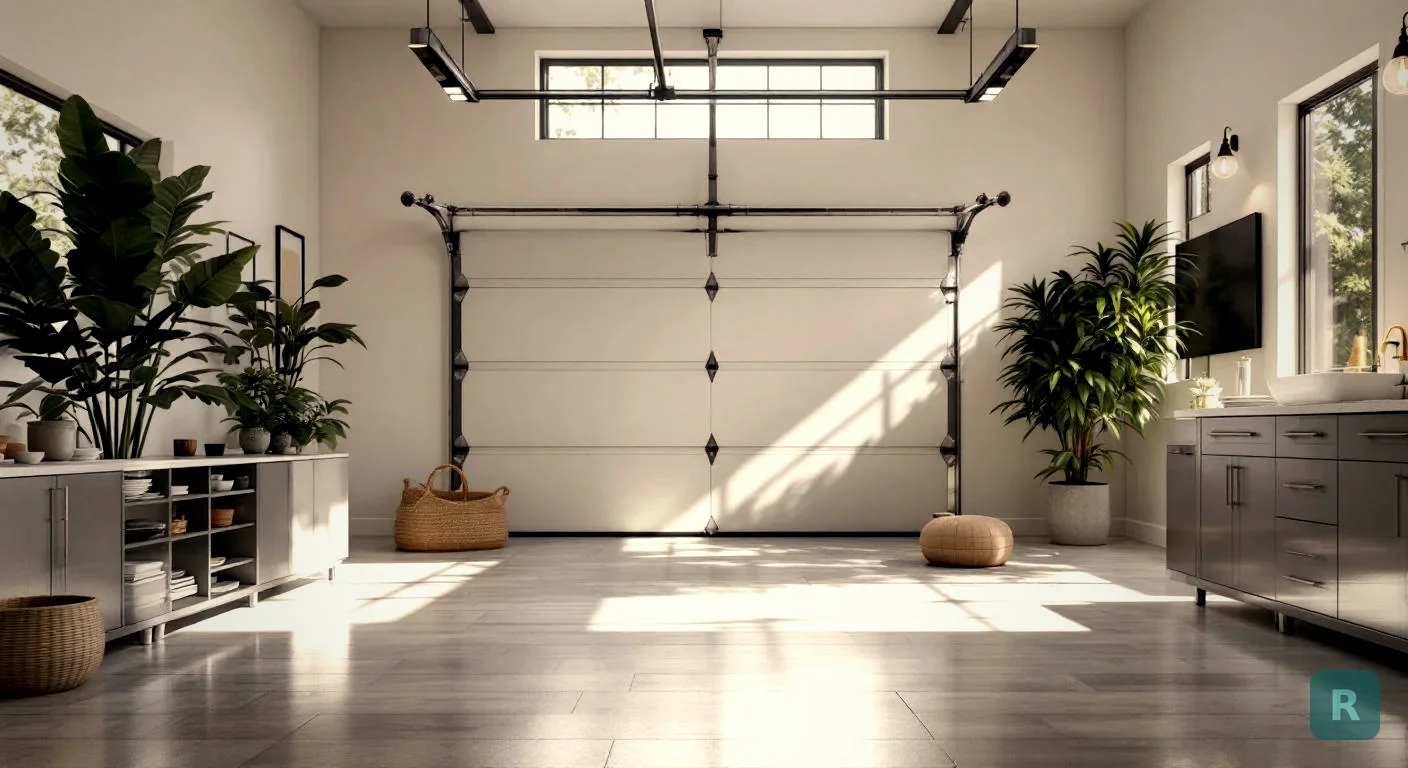
Here’s a real problem I run into with clients. They know they want to do something with the garage, but they can’t picture what it would actually look like as a finished space. They’ve stared at a concrete slab and a water heater for so long that imagining it as a clean home office or a tiled gym requires a mental leap that’s hard to make cold.
That’s exactly the problem ReVision AI was built to solve. You take a photo of your garage right now, choose a style or describe what you’re going for, and see what it could actually look like. Not a generic photo from a magazine. Your space. Transformed.
If you want to see your garage’s potential before you call a single contractor, download ReVision AI and try 3 free transformations. It helps you make a more confident decision - and it makes it a lot easier to explain to a contractor exactly what you want.
Check the ReVision AI gallery for some before/after examples of what transformed spaces actually look like.
How to Approach a Garage Remodel Step by Step
Workshop, gym, office, or living space - the answer determines your entire budget and whether permits are required. Don't start without a clear answer here.
Tape plastic to the floor for 24 hours. If condensation forms underneath, address the moisture before any framing or flooring goes in.
For habitable space or electrical work, get permits first. Inspectors catch things that save you from expensive mistakes later - that's their job.
Walls, ceiling, and the garage door opening. The door alone is a major thermal loss if you're conditioning the space - plan to replace it or install a proper insulated door.
Plan your circuits before closing the walls. A gym needs different outlets than an office. Think through what you'll plug in and where, and plan accordingly.
Mini-split heat pumps are usually the cleanest option for a converted garage. They heat and cool without requiring ductwork connections to the main house system.
Drywall, flooring, trim, and paint. This is where it stops looking like a construction zone and starts looking like a real space.
Before You Call Contractors for Bids
A few things I’d tell any homeowner before they start getting quotes:
- Know the intended use before you call anyone - vague requests lead to vague bids that fall apart during the project
- Ask every contractor specifically about moisture mitigation - if they don't bring it up, that's a red flag
- Get the permit situation sorted out before comparing bids - some contractors include it, others treat it as extra
- Budget an extra 15-20% for what the slab reveals - surprises happen
- Check the ceiling height before planning a full living space conversion - measure before you dream
- Mini-splits are often the best heating solution for converted garages - ask if your contractor has installed them
- Compare bids line by line, not just totals - the cheapest bid usually leaves things out
The garage remodel is one of the better uses of square footage you probably already have. The space is there. You’re just deciding what to do with it, and doing the prep work to make sure whatever you build lasts.
Get Design Inspiration Weekly
Fresh room makeover ideas, renovation tips, and style guides delivered to your inbox.
Design tips and inspiration only. Unsubscribe anytime.
Related Articles
The Best Free Home Remodel App (From a Contractor Who Uses One)
A free home remodel app can show you the finished room before demo day. Here's what to look for, what free really means, and how to test one right.
8 min readAI Remodel Kitchen: How I'd Preview a Kitchen Before Spending a Dollar
An AI remodel kitchen tool lets you see new cabinets, counters, and layouts before demo day. Here's how I'd use it as a contractor to plan a kitchen right.
8 min readRenovate With AI: How to Remodel Your Home Before You Spend a Dime
Use a renovate AI home remodel app to preview any room in seconds. See how to picture your space transformed before you ever swing a hammer or sign a bid.
8 min read