Bathroom Remodel Near Me: How to Find the Right Contractor (and What to Expect)
Key Takeaways
- Getting multiple bids is essential, but you need to compare the same scope - not just the bottom line number
- A mid-range bathroom remodel typically runs $8,000-$25,000 depending on size and finishes
- Most homeowners underestimate how long a bathroom remodel actually takes (4-8 weeks is common)
- Visualizing your finished bathroom before demo day helps you commit to decisions faster and avoid costly mid-project changes
- The cheapest bid almost always comes with strings attached
I’ve been doing bathroom remodels for over 20 years. Third-generation carpenter, Pacific Northwest contractor, and I’ve had more of these conversations than I can count. The search “bathroom remodel near me” seems simple. Type it in, get a list, pick someone. But what happens next is where most homeowners end up frustrated, overspent, or stuck in a project that’s dragging on way longer than they were told.
This post is about what I wish every homeowner knew before they started calling contractors.
What You’re Actually Searching For
When you type “bathroom remodel near me” into Google, you’re not just looking for someone with a license and a truck. You’re looking for someone who will show up, do quality work, communicate along the way, and finish the job at the price they quoted. That sounds basic. It’s surprisingly rare.
The local contractor market is a mixed bag. There are genuinely skilled, honest contractors out there. There are also people who will take your deposit, disappear for three weeks, then show back up and hit you with change orders you never expected. Knowing how to tell the difference before you sign anything is the whole game.
How to Vet Local Contractors
Get at least three bids. Not two - three minimum. Here’s why: two bids gives you a comparison. Three bids gives you a pattern. If one bid is dramatically lower than the other two, that’s information. It doesn’t always mean the low bidder is bad, but it means you need to ask questions.
When comparing bids, you need to verify they’re covering the same scope. I’ve seen this over and over - one contractor includes demo and disposal, the other doesn’t. One includes permits, the other assumes you’ll pull them yourself (you won’t, you’ll forget, and then you’ll have a problem). One includes tile backer board, the other is planning to tile straight over the old drywall, which will fail within a few years.
Ask each contractor for a line-item breakdown. Not just a total number. A professional contractor should be able to tell you what they’re charging for demo, tile, fixtures, labor, permits, and anything else that’s part of the job.
Know your real budget before the first conversation. Not what you hope it costs - what you can actually spend. Include a 15-20% buffer for surprises, because there will be surprises. Rot, outdated plumbing, things that only show up once the walls come open.
License, Insurance, and References
Check the license. Every state has a contractor licensing database you can search online. If someone can’t give you a license number, that’s your answer right there.
Ask for proof of general liability insurance and workers’ compensation. If a worker gets injured on your property and the contractor isn’t carrying proper coverage, you could be liable. Most homeowners don’t know this until it’s a problem.
References matter. Ask for three. Call them. Ask how the project went, whether the contractor communicated well, whether the final cost matched the estimate, and whether they’d hire them again. A contractor who won’t give references doesn’t have good ones.
What a Bathroom Remodel Actually Costs
I’m going to give you real numbers because vague answers don’t help anyone.
The wide range exists because of choices - the tile you pick, whether you’re moving plumbing, whether there’s rot behind the walls, and what your local labor market looks like. In the Pacific Northwest, labor costs are higher than average. A full bathroom remodel with a tile shower, new vanity, and updated fixtures regularly starts at $12,000-$15,000 in my market. That number shocks a lot of people. But when you break it down line by line, it makes sense.
The overhead alone - insurance, tools, truck, license, warranty - is something most homeowners never think about when they see a bid. They’re comparing it to their own hourly wage and thinking “how does $100/hr add up to this number?” It adds up because that rate has to cover a lot more than a single person’s time.
The Timeline Reality
HGTV has done homeowners a disservice. A bathroom remodel is not a weekend project. It’s not even a one-week project in most cases.
Here’s a realistic timeline for a full bathroom remodel:
- Design and material selection: 1-3 weeks (longer if you’re indecisive, which is expensive)
- Permit approval: 1-3 weeks depending on your municipality
- Material lead times: 2-6 weeks for custom tile, specialty fixtures, or made-to-order vanities
- Active construction: 2-4 weeks
- Inspections and final punch list: 3-7 days
That’s 6-12 weeks from first conversation to finished product if everything goes smoothly. Plan for the bathroom to be out of service for the full construction period. If it’s your only full bath, have a plan.
I've opened walls in PNW homes and found rot that changed the entire scope of a project. Old tile installed directly over greenboard that had been slowly molding for years. Outdated plumbing that had to come up to current code before we could proceed. Build contingency into your budget - 15-20% minimum - because what you can't see until demo day is a real factor.
Visualizing Your Bathroom Before You Commit
Here’s something I figured out the hard way in my contracting business: homeowners who can’t visualize the finished result are the hardest to work with. Not because they’re bad clients - because they’re indecisive. And indecision mid-project costs money.
Every time a homeowner changes their mind after we’ve already ordered materials, or after tile has been laid, there’s a cost. Sometimes a big one. The best thing you can do before you start any contractor conversation is know what you actually want.
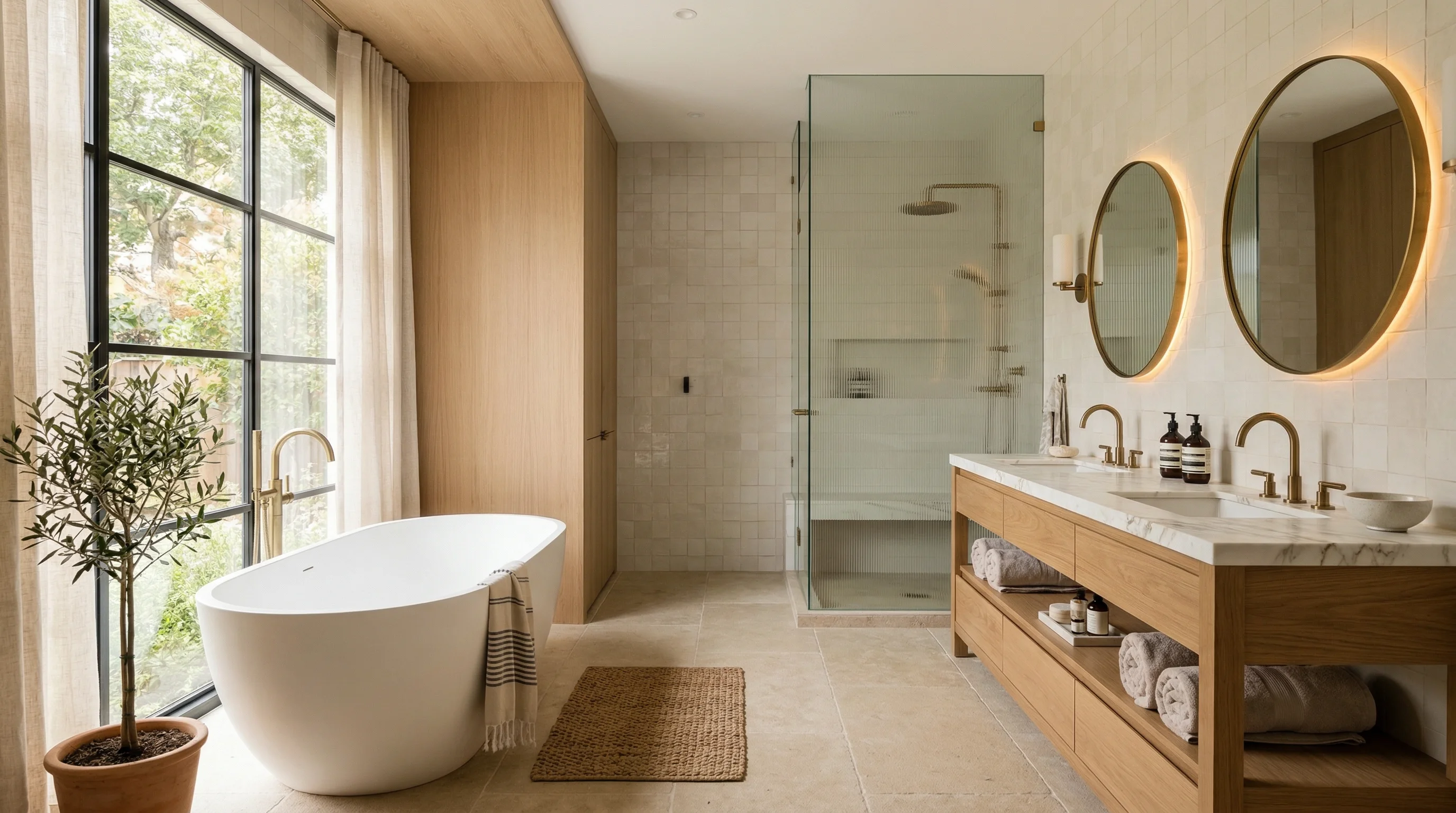
I used to tell clients to browse Pinterest and bring me photos. That’s still not bad advice. But now there’s a better option. ReVision AI lets you take a photo of your actual bathroom and see what it could look like in different design styles - Japandi, Modern Farmhouse, Coastal, Contemporary, and more. Your real room, transformed, so you can actually see the possibilities before you pick a tile or call a contractor.
Check out the gallery to see what that kind of before-and-after visualization looks like.
When you can show a contractor “this is what I’m going for” with an actual image of your space transformed, the whole conversation changes. You get more accurate bids. Fewer miscommunications. Less back-and-forth on material selections.
What to Expect During the Project
Once you’ve hired a contractor and signed a contract, here’s what the process actually looks like:
Walk through the scope, timeline, access arrangements, and what to do when questions come up mid-project. A good contractor will lay this all out upfront.
Old fixtures out, tile stripped, sometimes walls opened. This is where hidden problems show up. A reputable contractor calls you before proceeding if they find something unexpected.
Plumbing and electrical rough-in happens before anything gets tiled or closed up. This is inspection phase - municipality inspector comes through to approve the work before it gets covered.
The shower gets its waterproof membrane first, then backer board, then tile. Done right, this is what keeps the moisture out of your walls for the next 20+ years.
Vanity, toilet, lighting, trim, paint. The project starts looking like something you'd actually want to use.
Inspector signs off on the completed work. Then you walk through with the contractor and identify anything that needs touching up before final payment is released.
Red Flags to Watch For
I’ve seen contractors burn homeowners in predictable ways. Watch for these:
- Asking for more than 30-50% upfront before any work begins
- No written contract, just a handshake and a verbal quote
- Can't provide a license number or proof of insurance on request
- Vague bid with no line items - just a single total number
- No mention of permits in the scope (permits are legally required for most bathroom remodels)
- Pressure to sign immediately before you've had time to review
- Cash-only payment requirements
None of these are automatic disqualifiers in isolation - sometimes cash discounts are legitimate, for example. But when you see multiple red flags from the same contractor, that’s a pattern worth paying attention to.
Decide on Your Style First
Before you start calling contractors, spend time on the design side. Know what style you’re going for. Know your fixture finishes - matte black, brushed nickel, chrome, brass. Know whether you want a walk-in shower or a tub-shower combo. Know your tile preferences.
You don’t have to have every detail locked down. But the more clarity you bring to that first conversation, the better your bids will be and the smoother the project will run. Browse the styles gallery to get a feel for different directions before you start.
Then download ReVision AI and try 3 free transformations. Take a photo of your bathroom right now, pick a style, and see what the AI generates. That image gives you something concrete to show every contractor you call.
Your Pre-Call Checklist
Before you dial your first local contractor, have these things figured out:
- Know your realistic budget (not your wishful budget) with a 15-20% contingency built in
- Know the scope - full gut or cosmetic refresh?
- Have reference photos or a visualization of your target style
- Know the answers to: will plumbing move? Is the shower staying where it is? Tub or no tub?
- Have three or more contractors lined up to bid, not just one or two
- Know what questions to ask: license number, insurance, references, permit handling, payment schedule
- Set aside time for three reference calls before making a final decision
The search “bathroom remodel near me” is just the starting point. The homeowners who come out the other side happy - on budget, on time, with a bathroom they love - are the ones who did the homework before the first call. Take the time. It pays off.
Get Design Inspiration Weekly
Fresh room makeover ideas, renovation tips, and style guides delivered to your inbox.
Design tips and inspiration only. Unsubscribe anytime.
Related Articles
The Best Free Home Remodel App (From a Contractor Who Uses One)
A free home remodel app can show you the finished room before demo day. Here's what to look for, what free really means, and how to test one right.
8 min readAI Remodel Kitchen: How I'd Preview a Kitchen Before Spending a Dollar
An AI remodel kitchen tool lets you see new cabinets, counters, and layouts before demo day. Here's how I'd use it as a contractor to plan a kitchen right.
8 min readRenovate With AI: How to Remodel Your Home Before You Spend a Dime
Use a renovate AI home remodel app to preview any room in seconds. See how to picture your space transformed before you ever swing a hammer or sign a bid.
8 min read