Kitchen Remodel Design Ideas for 2026
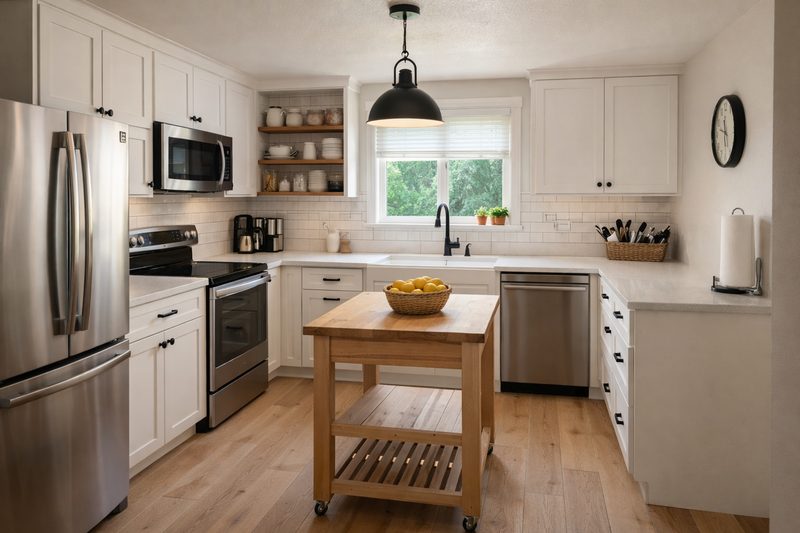
A mid-range kitchen remodel in the Pacific Northwest starts around $45,000. That’s the number I give clients before we talk about anything else, because HGTV has done a real number on homeowner expectations. If you’re sitting there thinking $15K sounds right, we need to reset before you fall in love with a design direction your budget can’t support.
That said, there are smart ways to spend that $45K. There are directions that photograph beautifully but don’t hold up to daily use, and there are directions that look just as good ten years later as they do on day one. After 20-plus years remodeling kitchens up and down the Pacific Northwest, I’ve seen which trends have legs and which ones age out.
Here’s what’s worth paying attention to in 2026.
1. Japandi Kitchens
This is the convergence of Japanese minimalism and Scandinavian warmth, and it’s the direction I’m seeing more serious homeowners move toward. Clean lines, warm wood tones (usually white oak or walnut), flat-front cabinetry in muted tones, and absolutely zero clutter. Countertops lean toward honed stone, not polished. Hardware is minimal or hidden.
The appeal: it looks calm and intentional. The challenge: it requires discipline to live in. Open shelving in a Japandi kitchen is only beautiful if you actually edit what goes on those shelves. Most people don’t.
From a build standpoint, this is a clean, efficient kitchen to construct. The material costs can run higher on the cabinet side - quality flat-front boxes aren’t cheap - but the rest of the finishes tend to be restrained.
See the Japandi style for visual reference and examples.
2. Modern Farmhouse Kitchens
The most common direction in PNW kitchens right now, and honestly still one of the best. Shaker cabinets in white or soft gray, quartz countertops, matte black or brushed brass hardware, farmhouse sink. This combination has been popular for a reason: it works in almost any home, it photographs well, and it holds resale value.
A few honest contractor notes on this style. Don’t cheap out on the quartz. Budget quartz looks like budget quartz. The quality is obvious in person. Spend the extra $8 to $12 per square foot and get something with real depth and movement.
On the farmhouse sink: I love them, but the cast iron versions are heavy. Make sure your base cabinet can handle the weight. I’ve seen people order a beautiful cast iron farmhouse sink and then have to retrofit the cabinet after the fact.
Shiplap as a kitchen element: yes, with limits. A shiplap accent behind open shelving or on a kitchen island reads well. Floor-to-ceiling shiplap in a kitchen is a moisture concern you want to be careful about. Seal it properly or skip it.
Explore the modern farmhouse style to see how this plays out across different kitchen configurations.
3. Industrial Kitchens
Industrial has matured. The raw, exposed-everything look of ten years ago has been refined into something more livable. Think concrete or slate countertops paired with warm wood lower cabinets, matte black fixtures, and pendant lighting with visible Edison bulbs - but balanced with softer elements so it doesn’t feel like a restaurant kitchen.
For open-plan spaces where the kitchen flows into a living area, the industrial direction creates strong visual anchors. The island becomes a real statement.
The practical issue with concrete countertops: they require sealing and maintenance. They can stain. They can crack if the substrate shifts. I’ve installed concrete counters that held up beautifully for years. I’ve also had to replace them at 18 months because the homeowner didn’t understand the maintenance requirements. If you want the look without the upkeep, concrete-look porcelain is a solid compromise.
Check out the industrial style for examples of how this translates across different kitchen layouts.
4. Coastal Kitchens
Particularly relevant in the Pacific Northwest, where we’re never far from water. Light blues, whites, natural textures. But 2026 coastal has moved past the seashell-and-anchor version. It’s cleaner now. Whitewashed or light natural wood cabinets, soft blue or sage accents, linen and rattan details, stone countertops with movement.
The best coastal kitchens feel like permanent vacation without screaming “beach house.” The key is restraint on the themed elements. One or two coastal textures go a long way. Stack them up and you end up with something that belongs in a rental property.
From a build standpoint, this is one of the more forgiving styles. The palette is light, which means minor imperfections in paint or drywall are less visible. It also pairs well with existing neutral finishes in older homes, which can reduce the scope of ancillary work.
5. Dark and Moody Kitchens
Counter-programming against all the white kitchens of the past decade. Deep navy, forest green, charcoal, or even matte black cabinetry with brass or warm gold hardware. These kitchens photograph like a magazine spread, and when executed well, they’re genuinely stunning in person.
The honest contractor caveat: dark kitchens require good lighting. If your kitchen has limited natural light, going dark is a gamble. You can compensate with under-cabinet lighting, strategically placed pendants, and high-CRI bulbs, but it takes planning. I’ve seen dark kitchen remodels turn a cooking space into a cave because the lighting plan was an afterthought.
If you’re drawn to this direction, start by testing a dark color in your actual space. The color palette tool can help you narrow down which specific dark tones work with your kitchen’s light conditions.
The dark moody style shows what’s possible when the lighting and finishes come together right.
6. Warm Contemporary Kitchens
This is the direction that bridges the gap between modern and traditional. Flat-front or lightly detailed cabinetry in warm tones - greige, warm white, soft terracotta - with wood accents and organic stone. It avoids the sterile feel of pure contemporary while skipping the ornate detail of traditional.
For homeowners who don’t want their kitchen to feel like a trend and don’t want it to feel dated either, warm contemporary hits the sweet spot. It’s going to look good in 2026 and still look good in 2035.
Material combinations that work: painted lowers with wood uppers, mixed metal hardware (brass and matte black together), waterfall quartz islands with wood end panels.
7. Quiet Luxury Kitchens
The kitchen equivalent of a high-end hotel. Everything is high quality, nothing is shouting. Panel-ready appliances that blend into the cabinetry. Thick slab countertops. Hidden storage solutions. Integrated lighting. The details are expensive, but they don’t announce themselves.
This is the style where the budget goes up significantly. Panel-ready refrigerators and dishwashers add $2,000 to $5,000 over standard appliances. Thick quartzite or marble slab countertops aren’t cheap. But the result is a kitchen that feels cohesive and calm rather than assembled from parts.
This direction shows up in the quiet luxury style if you want to see what the full execution looks like.
8. Organic Modern Kitchens
Natural materials, irregular forms, and a color palette pulled from earth and stone. Limewash or plaster walls. Live-edge wood elements. Handcrafted ceramic hardware. Countertops with real movement - leathered granite, book-matched marble, or natural stone with visible character.
This is the kitchen direction that feels most handmade. Which is intentional. After years of perfectly uniform manufactured surfaces, there’s a real appetite for materials that look like someone made them.
The organic modern direction rewards patience in material sourcing. The interesting stones, the handcrafted tiles, the one-of-a-kind fixtures - these things take time to find and time to arrive. If you’re on a tight timeline, this might not be your style.
How to Pick Your Direction
If you’re genuinely undecided, the best thing you can do is see these styles in your actual kitchen before you commit to anything. That’s exactly what ReVision AI does.
Take a photo of your current kitchen, apply any of these styles, and see a photorealistic result in seconds. Not a stock photo of a stranger’s kitchen - your kitchen, transformed. You can run through multiple directions in a single session and see which one actually resonates in your space.
Browse the full style gallery to see how these directions play out across different kitchen configurations, then bring your favorites into your own space with the app.
For a realistic budget check before you get deep into planning, the renovation ROI calculator and renovation budget tool are worth running through. Know your numbers before you fall in love with a finish.
Download ReVision AI and see which 2026 kitchen direction belongs in your home.
Get Design Inspiration Weekly
Fresh room makeover ideas, renovation tips, and style guides delivered to your inbox.
Design tips and inspiration only. Unsubscribe anytime.
Related Articles
AI Interior Decorator: How It Works and What It Can Actually Do
An AI interior decorator turns a photo of your room into styled design options in seconds. Here's how it works, what it nails, and where it falls short.
8 min readPaint AI Color Visualizer App: See the Color on Your Walls Before You Buy a Gallon
A paint AI color visualizer app shows real wall colors in your own room before you buy a single gallon. Here's how I use one on real jobs as a contractor.
6 min readDecorate With AI: How to See Your Room Restyled Before You Spend a Dime
Want to decorate with AI but not sure where to start? Here's how a third-generation carpenter uses it to test styles, layouts, and colors before buying.
8 min read