Mid Century Modern Living Room Ideas: Timeless Style That Actually Works
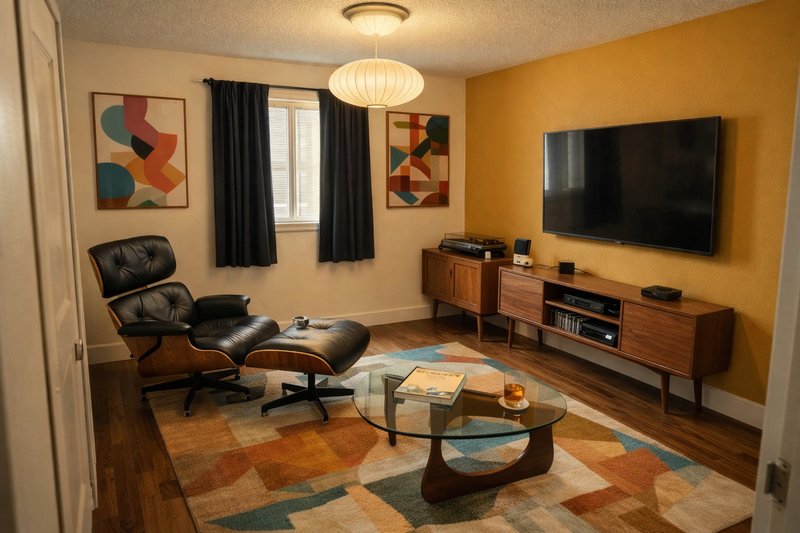
I’ve done hundreds of remodels over the past 20-plus years, and there is one design style that homeowners keep coming back to no matter what year it is: mid century modern. You’d think something from the 1950s and 60s would feel dated by now. It doesn’t. If anything, it looks more relevant than half the trends that have cycled through Pinterest in the last five years.
Here’s why MCM endures, and how to do it right in a living room.
What Mid Century Modern Actually Means
Mid century modern refers to design from roughly 1945 to 1969. Post-war America was building fast and optimistic. New materials were emerging. Designers were experimenting with organic shapes, manufactured materials, and the idea that good design should be accessible to regular people, not just the wealthy.
The result was furniture and architecture that felt futuristic at the time and somehow still feels fresh today. Clean lines, tapered legs, geometric forms with a softened edge. The style sits at the intersection of function and beauty. Nothing is overdone. Nothing is purely decorative. Every piece earns its place.
The Furniture Shapes That Define MCM
You don’t need to know brand names to spot mid century modern furniture. The shapes are unmistakable.
The tulip-base chair and table. A single pedestal base, usually in white or brushed steel, topped with a round table or a curved seat. Smooth, sculptural, ahead of its time when it was introduced and still looking like it belongs in a contemporary home today.
The low-profile sofa. MCM sofas sit closer to the ground than modern sectionals. The legs are exposed, tapered, and often angled outward slightly. The back is low. The arms are thin rather than overstuffed. The silhouette is horizontal and lean. In a living room, this sofa makes the ceiling feel taller.
The lounge chair and ottoman combo. Deep-cushioned with a reclining back, this is the most recognizable MCM seating piece. The frame is molded plywood, rosewood, or similar warm wood, with leather or wool cushions. The ottoman is low and matches the chair. This piece anchors a reading corner or a conversation area the way nothing else does.
Sunburst or starburst elements. The clock, the mirror, the wall art. MCM loved a radiating pattern, brass or bronze or natural wood. One well-placed starburst mirror or sunburst clock is an instant period signal without turning the room into a museum exhibit.
The credenza. Long and low, with tapered legs and clean lines. Usually walnut or teak veneer. The credenza lives against one wall and serves as a media console, bar, or storage unit. It keeps clutter out of sight while looking intentional.
The tulip table or tulip-leg dining table. If your living room opens to a dining area, this is the piece that ties the spaces together.
The MCM Color Palette
This is where a lot of people get it wrong. They see mid century modern and think it means all brown wood and tan upholstery. That’s not the full picture.
The MCM palette is built on a warm neutral base, then punctuated with specific accent colors that were everywhere in the era:
- Olive green. Muted, earthy, and warm. This shows up in velvet upholstery, wallpaper, and paint. It pairs with walnut wood tones perfectly.
- Mustard yellow. Not bright yellow. Not school bus. Mustard, golden, slightly brownish yellow. A mustard accent chair or throw pillows does more for a room than almost any other single choice.
- Burnt orange and terracotta. Warm, grounded, and spicy. Works best in small doses: cushions, a ceramic lamp base, a piece of art.
- Avocado green. The more polarizing MCM color. If you’re going for it, commit. Half-measures look dated rather than intentional.
- Teal and turquoise. These work as pop colors in an otherwise neutral room. A single teal accent against warm wood and off-white walls has staying power.
The wood tones are the backbone: walnut, teak, and rosewood are the MCM classics. They’re dark with reddish warmth, not cold like gray-stained woods. If you’re buying new pieces, look for warm-toned wood that shows genuine grain.
Walls in MCM living rooms are typically off-white, warm white, or a muted tone. The furniture and wood do the work. You don’t need colored walls when the furnishings are this strong.
Layout Principles for MCM Living Rooms
MCM design is intentional about how furniture relates to space. A few principles that make a difference:
Float the furniture. Don’t push everything against the walls. MCM living rooms have furniture pulled into the room, with space behind the sofa. This makes the room feel designed rather than assembled.
Anchor with a rug. A large area rug in a geometric pattern, a simple solid, or a subtle stripe holds the seating area together. Wool is historically accurate. Jute works for a softer, more natural version. The rug should be big enough that all four legs of the sofa sit on it.
Create conversation. MCM rooms are built around talking and gathering. Chairs face the sofa. Seating arrangements are circular or square, not all aimed at the TV. If the TV is in the room, it goes in the credenza or on a low media console, not dominating the wall.
Let the ceiling breathe. Low furniture makes ceilings feel taller. Don’t fill up that vertical space with tall bookshelves, high artwork, or overcrowded walls. One large piece of art, hung at eye level, is more MCM than a gallery wall.
Less is right. MCM is disciplined about editing. Every piece earns its place. If something doesn’t serve a function or genuinely add to the visual story of the room, it probably doesn’t belong.
The Indoor/Outdoor Connection
One of the things that made MCM architecture radical at the time was the deliberate relationship between inside and outside. Large windows, sliding glass doors, and materials that carried from the interior out to a patio were all intentional moves.
In a living room, you can honor this tradition without a full renovation. Keep window treatments minimal. If you can, choose hardware that maximizes the glass you have. Use plants strategically: a sculptural floor plant, a fiddle leaf fig, or a large snake plant in a ceramic pot brings that outside-inside feeling.
Concrete, stone, or tile floors that continue from inside to a patio are the full MCM commitment. If that’s not your situation, a large natural fiber rug that echoes the texture of outdoor materials achieves a softer version of the same idea.
What Makes MCM Timeless
Trends come and go. I’ve watched enough of them cycle through client consultations to know which ones have staying power and which ones are just Instagram moments.
MCM has staying power for a few reasons. First, it’s based on genuine craft. The furniture shapes were developed by actual designers working with actual materials, solving real problems about how people live. Second, it doesn’t date itself to a specific cultural moment the way some styles do. The bones of MCM are as current today as they were in 1962.
Third, and this is the contractor talking: MCM is forgiving to work with. The palette is warm and neutral. The furniture is scaled for real rooms, not showrooms. You don’t need a 3,000-square-foot space to pull it off. A 15x18 living room with the right sofa, a credenza, a couple of accent chairs, and warm wood tones looks like it was designed on purpose, not cobbled together.
Mixing MCM Without Making It a Museum
The mistake is going 100 percent period-authentic. You end up with something that looks like a stage set, not a home. The better move is to root the room in MCM but let it breathe.
A contemporary abstract painting over a walnut credenza. A natural linen throw on a vintage-inspired sofa. A modern floor lamp with an MCM-shaped shade. You’re honoring the tradition without being ruled by it.
The styles that mix well with MCM are Japandi, Scandinavian, and contemporary. Styles that clash: maximalist bohemian, heavy farmhouse, ornate traditional. The common thread in successful MCM rooms is restraint. You’re editing down, not piling on.
Browse the full collection of design styles at ReVision AI and compare MCM against other options side by side. Seeing them together helps you understand what makes each one distinct.
See MCM in Your Living Room Before You Buy Anything
Here’s the challenge with any major design decision: you’re committing money and time based on photos of other people’s rooms. Their proportions are different from yours. Their light is different. Their starting point is different.
The smarter move is to see the transformation in your actual space first.
ReVision AI lets you take a photo of your living room as it sits right now and see it transformed into a mid century modern design in seconds. You can experiment with the style before spending a dollar on furniture or paint. If it clicks, you know. If it doesn’t quite work with your room’s bones, you find out before you’re stuck with a credenza that doesn’t fit the space.
Download the app and try it for free. Three transformations on the house.
The Bottom Line on MCM Living Rooms
Mid century modern has been declared over and come back stronger about six times since I started in this trade. It’s not going anywhere because it’s built on principles that are genuinely sound: good proportions, honest materials, functional elegance, and the belief that a well-designed room makes life better.
If you’re drawn to it, trust that instinct. The living room is where you spend most of your waking hours at home. Getting that space right is worth taking seriously, worth doing with intention, and worth doing once and doing right.
Measure twice, cut once. Same principle applies to design decisions.
Get Design Inspiration Weekly
Fresh room makeover ideas, renovation tips, and style guides delivered to your inbox.
Design tips and inspiration only. Unsubscribe anytime.
Related Articles
AI Interior Decorator: How It Works and What It Can Actually Do
An AI interior decorator turns a photo of your room into styled design options in seconds. Here's how it works, what it nails, and where it falls short.
8 min readPaint AI Color Visualizer App: See the Color on Your Walls Before You Buy a Gallon
A paint AI color visualizer app shows real wall colors in your own room before you buy a single gallon. Here's how I use one on real jobs as a contractor.
6 min readDecorate With AI: How to See Your Room Restyled Before You Spend a Dime
Want to decorate with AI but not sure where to start? Here's how a third-generation carpenter uses it to test styles, layouts, and colors before buying.
8 min read