Modern Farmhouse Bathroom Design Tips (From a Contractor Who's Built Them)
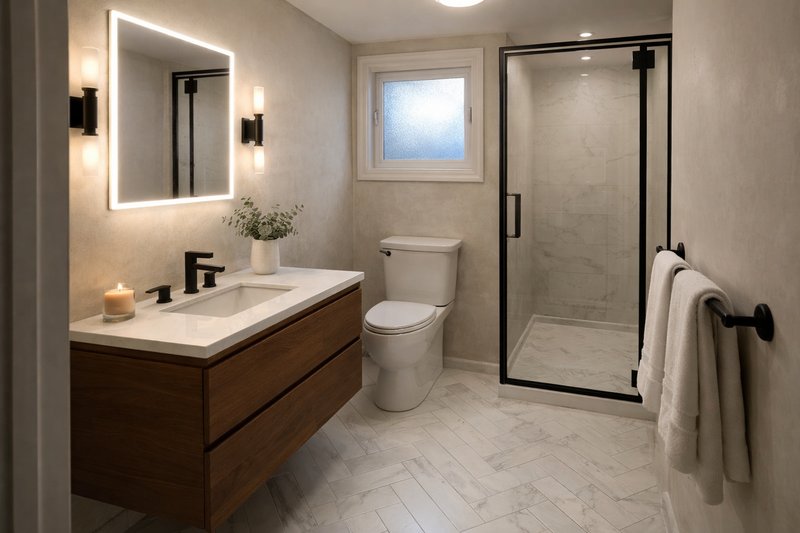
Modern farmhouse has been the most requested bathroom style in the Pacific Northwest for the past five years, and I don’t see it slowing down. There’s a reason for that. When it’s done well, a modern farmhouse bathroom hits a perfect balance: it feels warm and lived-in without looking dated, it pairs with almost any home style, and it photographs extremely well for resale.
When it’s done wrong, it looks like a catalog that expired three years ago.
Here’s what to know from the contractor’s side of this style.
What “Modern Farmhouse” Actually Means in a Bathroom
The term gets applied to a wide range of things, so let me define the version worth building.
Modern farmhouse bathrooms combine clean architectural lines from contemporary design with warm, natural materials and a slightly rustic character. The key word is “modern.” This isn’t a barn-themed bathroom with mason jars and chicken wire. It’s a refined take on those warmer elements, edited down to what actually looks intentional.
The classic visual signatures: matte black fixtures, white or off-white palette, natural wood accents, shaker-style cabinetry, subway or handmade tile, and at least one texture element (often shiplap, beadboard, or stone).
Before you commit to any direction, it’s worth seeing it applied to your actual bathroom. The modern farmhouse style page has a solid visual reference, and you can take it further by running your own space through the ReVision AI app.
Fixtures: Go Matte Black or Brushed Brass, Not Both
Fixture choice is where a lot of modern farmhouse bathrooms lose the thread. The instinct is to mix metals because you’ve seen designers do it. And it can work, but only if you understand the rule underneath it.
Matte black and brushed brass don’t mix in a small bathroom. The space isn’t big enough for two statement metals. Pick one and run it consistently: faucet, shower fixtures, towel bars, toilet paper holder, cabinet pulls. Consistency is what makes the room feel designed rather than assembled.
Matte black is the cleaner, more contemporary choice. It reads crisp and modern.
Brushed brass (not polished - never polished gold) is warmer and has more personality. It ages beautifully and works especially well with warm wood tones and natural stone.
Both are wrong choices if you have chrome fixtures everywhere else in the home and no plan to update them. Design is a whole-home conversation, not room by room in isolation.
Shiplap: The Honest Contractor Truth
Shiplap is the element most associated with modern farmhouse style, and it’s also the most misused. I’ve built it into a lot of bathrooms. Here’s what you need to know.
Shiplap in a bathroom is a moisture management problem waiting to happen if you install it wrong.
The shower and tub surround area: no shiplap, full stop. I don’t care how waterproof the paint is or how well you caulk it. This is a moisture zone. Use tile. Using wood products in a direct splash zone creates rot risk, and rot in a bathroom can compromise the subfloor and structural elements underneath. I’ve torn out enough water-damaged bathrooms to say this without hesitation.
Accent walls in a dry zone: yes, with proper treatment. A shiplap accent wall behind the vanity or opposite the shower, properly sealed and painted, works well. It adds texture and character without the moisture risk.
Beadboard wainscoting as an alternative: also excellent. The traditional paneling profile fits the farmhouse aesthetic, and when properly painted and caulked at the base, it handles the moisture in a bathroom’s dry zones well.
The ceiling: this is where shiplap gets interesting. A shiplap or wood-look ceiling in a well-ventilated bathroom is a strong design move. It’s unexpected, it adds warmth, and it photographs beautifully. Make sure your bathroom ventilation is working properly first. A bathroom with a marginal exhaust fan and a wood ceiling is a mold setup.
Vanities: What to Look For and What to Skip
The vanity is the anchor piece in a bathroom. Get this right and the rest of the room follows. Get it wrong and nothing else saves it.
For modern farmhouse, you want a freestanding vanity with a furniture-like feel - legs rather than a skirted base, clean lines, shaker drawer fronts. White, off-white, sage green, or navy are the color directions that work. Natural wood-look finishes are increasingly popular and they work well if the wood tone complements your flooring.
What to skip: the prefabricated vanity from the big box store with the mirrored cabinet built in. It’s the lowest-effort version of this category and it always reads that way. The mirror and the vanity are two separate decisions. A standalone vanity with a framed mirror above it, or a custom barn wood framed mirror, is worth the extra investment.
Vanity top material matters too. Marble looks stunning and gets damaged easily. Quartz gives you the marble look with significantly more durability. Cultured marble tops are cheap and age like it. For a modern farmhouse bathroom, my recommendation is typically honed or matte-finish quartz. It looks intentional and holds up.
Stone vessels and undermount sinks both work in this style. Vessel sinks can look great, but they require taller faucets and can feel uncomfortable for shorter users at the wrong vanity height. Undermount is more functional and more timeless.
Tile: Where the Real Character Lives
Modern farmhouse bathrooms use tile as a texture element, not just a functional surface. Here’s the breakdown of what works.
Floor tile: Large format is generally going to look better than small format in this style. 12x24 or larger porcelain in a stone look or matte white. Hex tile in matte white or cement look also works well for a more handcrafted feel. Avoid high-gloss white floor tile - it shows every water mark and shows every scuff in regular daylight.
Shower tile: This is where you can get more creative. Classic white subway tile in a vertical stack bond pattern reads contemporary farmhouse. Handmade tile with slight variation in the glaze adds a crafted feel. Large format stone-look porcelain slabs (minimal grout lines) for a more elevated look.
Grout color matters more than most people realize. White grout with white subway tile reads clean but shows discoloration over time. Gray grout with white tile is more practical and adds definition. Dark grout with white tile is a strong visual statement. Match the grout color choice to how much maintenance the homeowner is willing to do.
Accent tile: One pattern tile used as a liner, a niche interior, or a border goes a long way. Don’t overdose on pattern tile. One intentional moment is better than pattern everywhere.
Color Palette for Modern Farmhouse Bathrooms
Keep it simple. The palette works best with no more than three core colors: a primary neutral, a warm accent, and a contrast element.
Primary neutral: white, off-white, warm cream, or very light gray. This goes on walls and tile surfaces.
Warm accent: natural wood tones, warm gray stone, or a soft paint color (sage green, dusty blue, warm taupe) on the vanity.
Contrast element: matte black or brushed brass, used consistently through all fixtures and hardware.
The color palette tool can help you test combinations before you commit to paint or tile orders. Getting this wrong after you’ve ordered materials is an expensive lesson.
What It Actually Costs
An honest modern farmhouse bathroom remodel in the Pacific Northwest runs $12,000 to $30,000 depending on scope. A smaller bathroom (50 square feet) with a focused refresh - new vanity, new fixtures, new tile on the shower walls, new flooring - can be done for $12K to $16K if you’re making smart material choices and working with an experienced contractor.
A full gut renovation of a primary bathroom (80-plus square feet, new shower, freestanding tub, double vanity, heated floor) pushes $25K to $40K. The difference is driven by tile complexity, fixture quality, plumbing relocation (the expensive variable), and labor scope.
Budget 15 to 20 percent contingency. Bathroom walls, especially in older PNW homes, hide moisture damage that only reveals itself after demo. I’ve opened up tile in a bathroom that looked fine from the outside and found rot that added $4,000 to the scope. Not because anyone did anything wrong - it’s just what was back there.
Pulling the Room Together
The rooms that nail the modern farmhouse look do so because every element is in conversation with every other element. The fixture metal, the vanity finish, the tile texture, the mirror shape, the lighting style - they’re all making the same visual argument.
Collect your material samples before the work starts. Hold them together in the actual room, in the actual light. Photos of materials don’t tell the whole story. Natural light versus artificial light changes how a tile or a wood tone reads.
And before you finalize any of this, see the full design applied to your bathroom. Download ReVision AI and run your existing bathroom through the modern farmhouse style. You’ll know within seconds whether this is the direction you want to commit to, or whether a different style in the full styles library is actually a better fit for your space.
Good planning on the front end makes the whole project go better. It’s always easier to change your mind before the tile is ordered.
Get Design Inspiration Weekly
Fresh room makeover ideas, renovation tips, and style guides delivered to your inbox.
Design tips and inspiration only. Unsubscribe anytime.
Related Articles
AI Interior Decorator: How It Works and What It Can Actually Do
An AI interior decorator turns a photo of your room into styled design options in seconds. Here's how it works, what it nails, and where it falls short.
8 min readPaint AI Color Visualizer App: See the Color on Your Walls Before You Buy a Gallon
A paint AI color visualizer app shows real wall colors in your own room before you buy a single gallon. Here's how I use one on real jobs as a contractor.
6 min readDecorate With AI: How to See Your Room Restyled Before You Spend a Dime
Want to decorate with AI but not sure where to start? Here's how a third-generation carpenter uses it to test styles, layouts, and colors before buying.
8 min read